FISH Signature Event

2026 Medical Device Make-A-Thon

72 hours. Real healthcare problems. Real prototypes.

November 5–8, 2026 · University of Virginia

Nov 5–8, 2026 University of Virginia 72 Hours All Majors Welcome Free to Participate

This Year

What to expect in 2026

The 2026 Medical Device Make-A-Thon brings interdisciplinary student teams together for a 72-hour sprint to conceptualize, design, and prototype solutions to a real clinical challenge; with workshops, mentorship, and fabrication resources along the way.

Below you'll find this year's speakers, workshop leaders, judges, and mentors, plus the full weekend schedule. The problem statement is revealed Thursday evening.
No prior medical device experience is required; just curiosity, initiative, and a willingness to build.
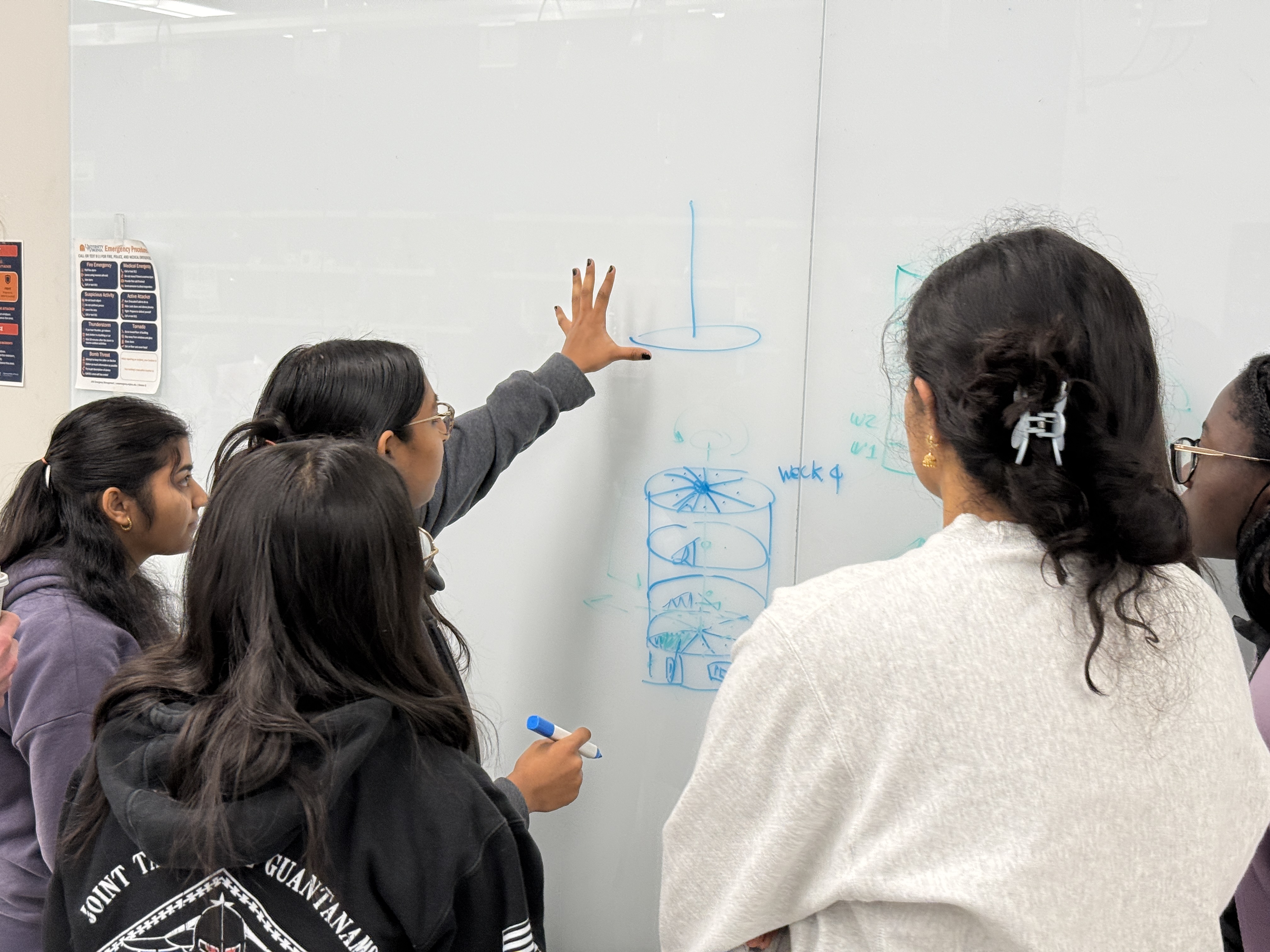
Students collaborating during a FISH Make-A-Thon

The Challenge

2026 Problem Statement

From Symptom to Solution

Create a device that minimizes mobility issues derived from neurodegenerative diseases to improve functional independence.

Neurodegenerative diseases progressively damage nerve cells in the brain and/or spinal cord, often affecting movement, coordination, balance, and independence. Examples include Parkinson's disease, ALS, and Huntington's disease.

Finding Design Opportunities

Symptom + Activity = Friction = Opportunity

Pick a symptom, find the everyday activity it affects, identify the specific difficulty (the friction), and develop an intervention from there.

Patient Case: Jodie

Jodie is a 55-year-old woman living independently with Parkinson's disease. She is employed, socially active, and independent in daily life, but increasing mobility challenges make routine activities harder: bed mobility, dressing, maintaining balance, carrying objects while using mobility aids, freezing of gait, navigating crowded spaces, and moving between sitting and standing. She spends more time planning and adapting her movements, and sometimes avoids activities altogether.

Her case shows that mobility goes beyond walking. It includes everyday transitions, independence, and participation in the community.

Reframing Functional Independence

  • Mobility is the ability to move safely, confidently, and independently through daily life, not only to get from Point A to Point B.
  • Independence does not mean doing everything without help. It means having the ability, choice, and opportunity to take part in meaningful activities.
  • Focus on the patient's lived experience, not just clinical symptoms.
  • Consider how the person, the activity, and the environment interact.

Frugal Innovation & Systems Thinking

Innovation does not have to be technologically complex to be meaningful. Strong solutions prioritize:

  • Affordability and accessibility
  • Durability and maintainability
  • Usability and safety
  • Practicality in real-world environments

Speakers & Workshop Leaders

Voices from the field

Keynote Speaker · Judge

Dr. Gregory Streeter

Assistant Professor of Family Medicine; Co-Medical Director, UVA Primary Care Center

Thursday evening keynote

Workshop Leader

Ammon Shepherd

UVA Library Makerspace Manager

Leads the CAD workshop

Workshop Leader

Todd Delong

Assistant Professor of Electrical and Computer Engineering, UVA

Leads the Arduino workshop

Workshop Leader · Judge

George Prpich

Associate Professor of Chemical Engineering, UVA

Leads the Pitch workshop

Judges

Who evaluates the final pitches

Judge

Dr. Peirce-Cottler

Chair of UVA Biomedical Engineering

Judge · Workshop Leader

George Prpich

Associate Professor of Chemical Engineering, UVA

Also leads the Pitch workshop

Judge

Kirstin Bush

Biomedical Design Engineer; Medical Device Innovation Specialist

Judge · Keynote Speaker

Dr. Gregory Streeter

Assistant Professor of Family Medicine; Co-Medical Director, UVA Primary Care Center

Also gives the Thursday evening keynote

Mentors

Clinicians, engineers, and industry partners

Mentor

Noah Perry

BME – Clinical Design

Mentor

Sher Afgan

Firefighter & Paramedic

Mentor

Christie Blonkvist

Product Development Engineer, MicroAire

Mentor

Peter Nelson

Manufacturing Engineer (Testing/Validation), MicroAire

Mentor

Rusty Lewis

Electrical Engineer, MicroAire

Mentor

Christina Weiss

Senior Quality Assurance Engineer, MicroAire

Mentor

Ella Bouker

Graduate Student, Biomedical Engineering

Mentor

Jess Suiter

Graduate Student, Biomedical Engineering

Weekend Flow

Schedule

From kickoff and workshops to prototyping, mentor checkpoints, and final presentations, the weekend is built to keep teams moving from idea to impact. Times and rooms may shift slightly, so check back closer to the event.

Thursday, Nov 5

  • 5:00 – 6:00 PMStudent team check-in, lanyard pickup & collaborator check-inDavis Commons
  • 6:00 – 6:15 PMBrief introductionRice 130
  • 6:15 – 6:45 PMKeynote: Dr. StreeterRice 130
  • 6:45 – 7:15 PMProblem statement reveal & Q&ARice 130
  • 7:15 – 7:30 PMHousekeeping & official Make-A-Thon startRice 130
  • 7:30 – 8:30 PMDinnerDavis Commons
  • 7:30 – 10:00 PMPlanning block (low fidelity, no heavy building yet)Davis Commons
  • 10:30 PMClose for the night

Friday, Nov 6

  • 8:00 – 9:00 AMMorning check-inDavis Commons
  • 9:30 AM3D printing starts
  • 10:00 – 11:00 AMWorkshop Block 1: Documentation, Testing & PitchesChemistry MOL
  • 11:00 AM – 12:30 PMMentor office hours / Design Checkpoint 1Chemistry MOL
  • 1:30 – 4:30 PMWork time 2
  • 2:00 – 3:00 PMWorkshop Block 2: CAD / FabricationThornton A207
  • 4:00 – 6:00 PMMentor office hours / Design Checkpoint 2Thornton A207
  • 6:00 – 7:00 PMDinnerDavis Commons
  • 7:00 – 10:00 PMWork time 3Thornton A207
  • 10:00 PMFinal prints for Friday due

Saturday, Nov 7

  • 8:00 – 9:00 AMBreakfast & overnight print pickupsDavis Commons
  • 8:30 AM – 12:00 PMAssembly & testing block 1Thornton A207 / A120
  • 9:00 – 9:30 AMWorkshop Block 3: Arduino & ElectronicsThornton A207 / A120
  • 10:00 AM – 12:00 PMMentor office hours + mini design checkpointThornton A207 / A120
  • 12:00 – 1:00 PMLunchDavis Commons
  • 1:00 – 2:30 PMAssembly & testing block 2Thornton A207 / A120
  • 2:30 – 4:30 PMMentor office hours + mini design checkpointThornton A207 / A120
  • 4:30 – 6:30 PMAssembly & testing block 3Thornton A207 / A120
  • 6:30 – 7:30 PMDinnerDavis Commons
  • 7:30 – 10:00 PMAssembly & testing block 4Davis Commons / Thornton A207 / A120
  • 12:00 AM (midnight)Final prints for Saturday due

Sunday, Nov 8

  • 8:00 – 8:30 AMMorning check-in, breakfast & overnight print pickupsDavis Commons
  • 10:00 AM – 12:00 PMPresentation practiceWilsdorf / Rice conference rooms
  • 11:30 AM – 12:30 PMLunch (open for collaborators)Davis Commons
  • 11:45 AM – 12:30 PMLunchDavis Commons
  • 12:00 PMPresentation submission due
  • 12:30 – 12:40 PMTransition to MEC 205MEC 205
  • 12:40 – 12:45 PMBrief introductionMEC 205
  • 1:00 – 3:30 PMPresentationsMEC 205
  • 3:30 – 4:00 PMClosing speech (MicroAire) + awards & picturesMEC 205

2026 Partners

Organizations helping make the event possible

The Jefferson Trust

MicroAire

Coulter Center

Ready to build?